
Does Paintless Dent Repair Work on Wrapped Cars?
It depends on the dent and the quality and condition of the wrap.
Paintless dent repair is a viable option for wrapped vehicles with minor dents, shallow creases, body line damage, plastic bumper dents, dents on flat or slightly curved surfaces, or multiple minor dents. However, since not all vehicle dents and car wrap materials and conditions are the same, some considerations must be taken into account before a professional can have a definite answer whether PDR can work on your wrapped car. These include the current condition of the wrap, the type and location of the dent, the degree of damage, and their capability to work with wrapped vehicles.
In this article, you will learn how PDR works and what considerations are taken to determine whether a wrapped vehicle can be repaired of its dents with it.
How Paintless Dent Repair Works
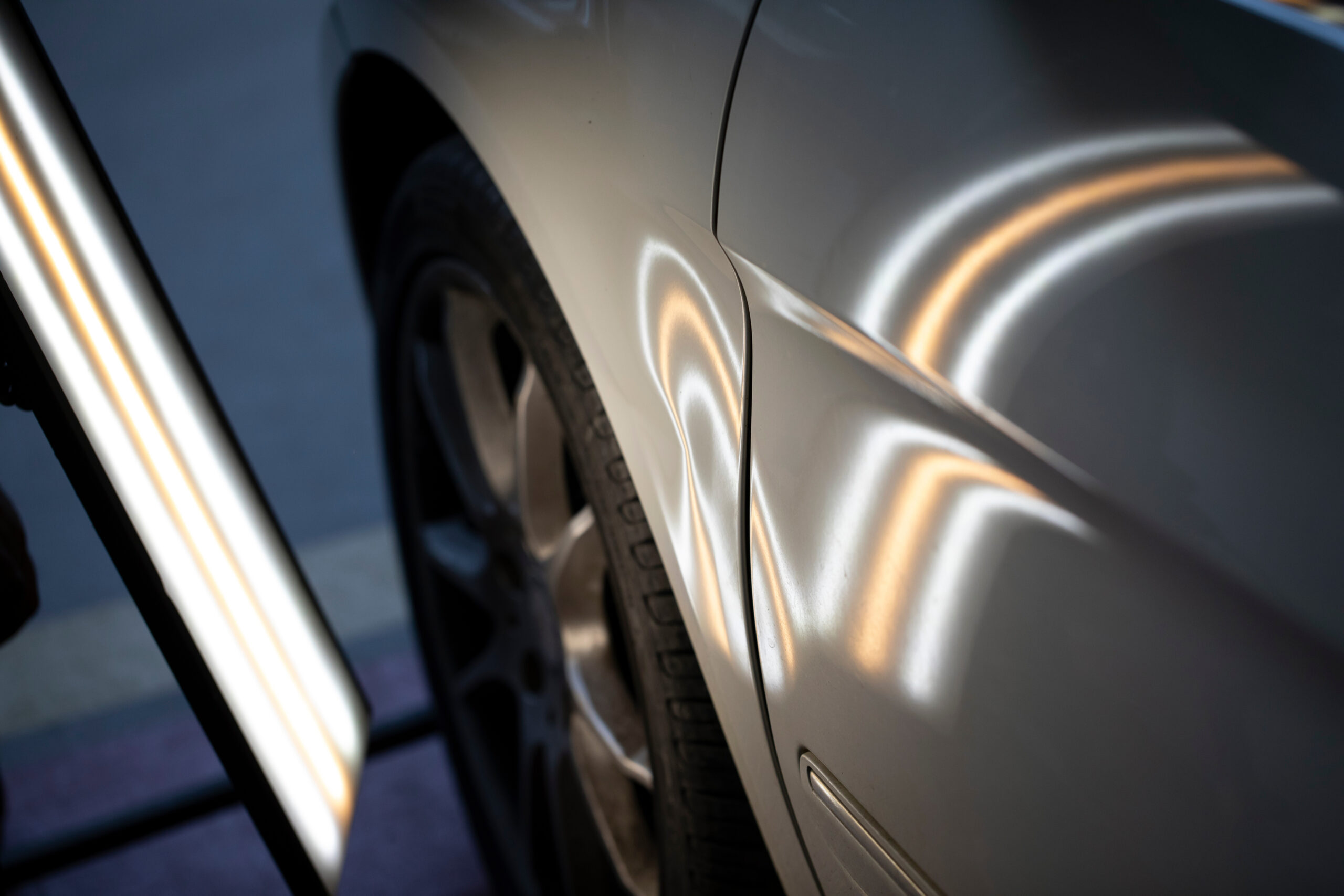
Paintless dent repair or PDR allows for the removal of dents and dings from a vehicle’s surface without the need for sanding, filling, repainting, or other traditional bodywork methods.
This method is done through the use of specialized tools to apply controlled pressure to the dent from inside the vehicle’s panel, gradually pushing it back into place. As long as the paint is undamaged before being repaired and the procedure is done right, the vehicle can be restored to its original shape without having to repaint it.
The key to PDR’s effectiveness in correcting dents without compromising the original paint finish lies in the flexibility and condition of the vehicle’s panels. This is why newer vehicles with relatively thin and malleable metal panels are good candidates for this technique, and thicker, more rigid panels and the presence of rust or other damage can affect its feasibility.
The Impact of Wraps on PDR
Vehicle wraps introduce some challenges when removing dents through paintless dent repair.
These challenges may make repairing the vehicle more difficult or increase the chances of having an inferior result. In some cases, especially if the indentation is severe, it may lead to tears, peeling, or other cosmetic issues for the wrap. Because of this, some technicians may opt to remove the wraps temporarily, or take longer performing the repair.
For example, the wrap may interfere with the glue tabs used in PDR to pull the panel back into place. Technicians may choose to remove the wrap temporarily to ensure they can manipulate the metal effectively and do not damage the vehicle wrap. If the PDR technician has little to no experience with car wraps, or if they are of poor quality or condition, the removal may cause permanent damage to the wrap or compromise its adhesive.
Moreover, repairing severe dents are more likely to cause tears, peeling, or cosmetic issues on the car wrap, even when the technician has been careful. And, damage is even more likely for vehicle wraps of poor quality or condition, since they are less resistant to forces applied to them and are more likely to tear, stretch, or peel.
Factors to Consider Before Having Paintless Dent Repair on Your Wrapped Vehicle
Before opting for Paintless Dent Repair on a wrapped vehicle, it’s important to evaluate several key factors to ensure the process won’t compromise the integrity of your vehicle wrap.

Severity of the dent
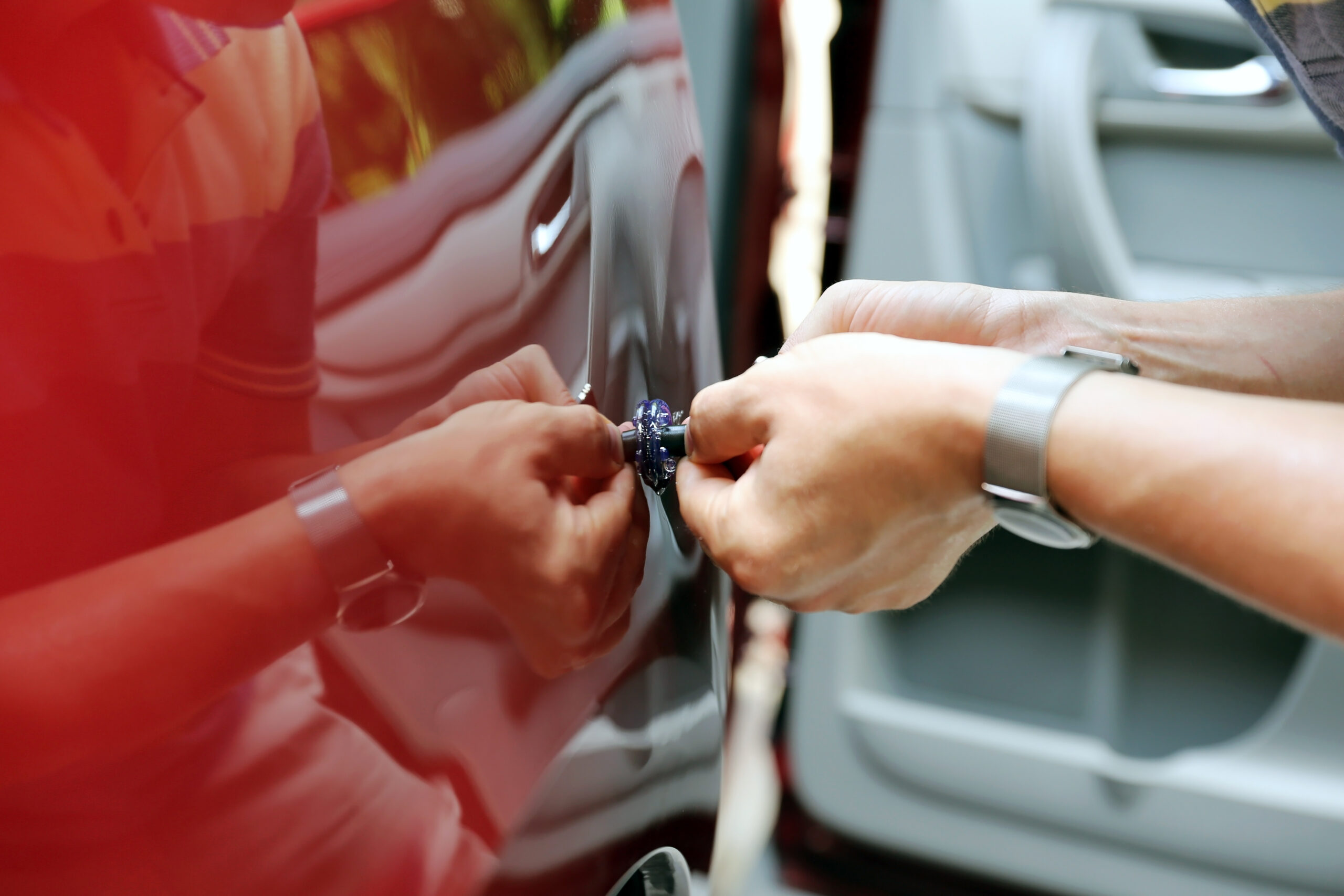
The success of any paintless dent repair depends on the severity of the dent. PDR is most effective for minor dents wherein the panel has not deeply creased or caused extensive damage to the rest of the body. For more severe damage, the vinyl wrap could be stretched or damaged during the repair.
Dent size and location
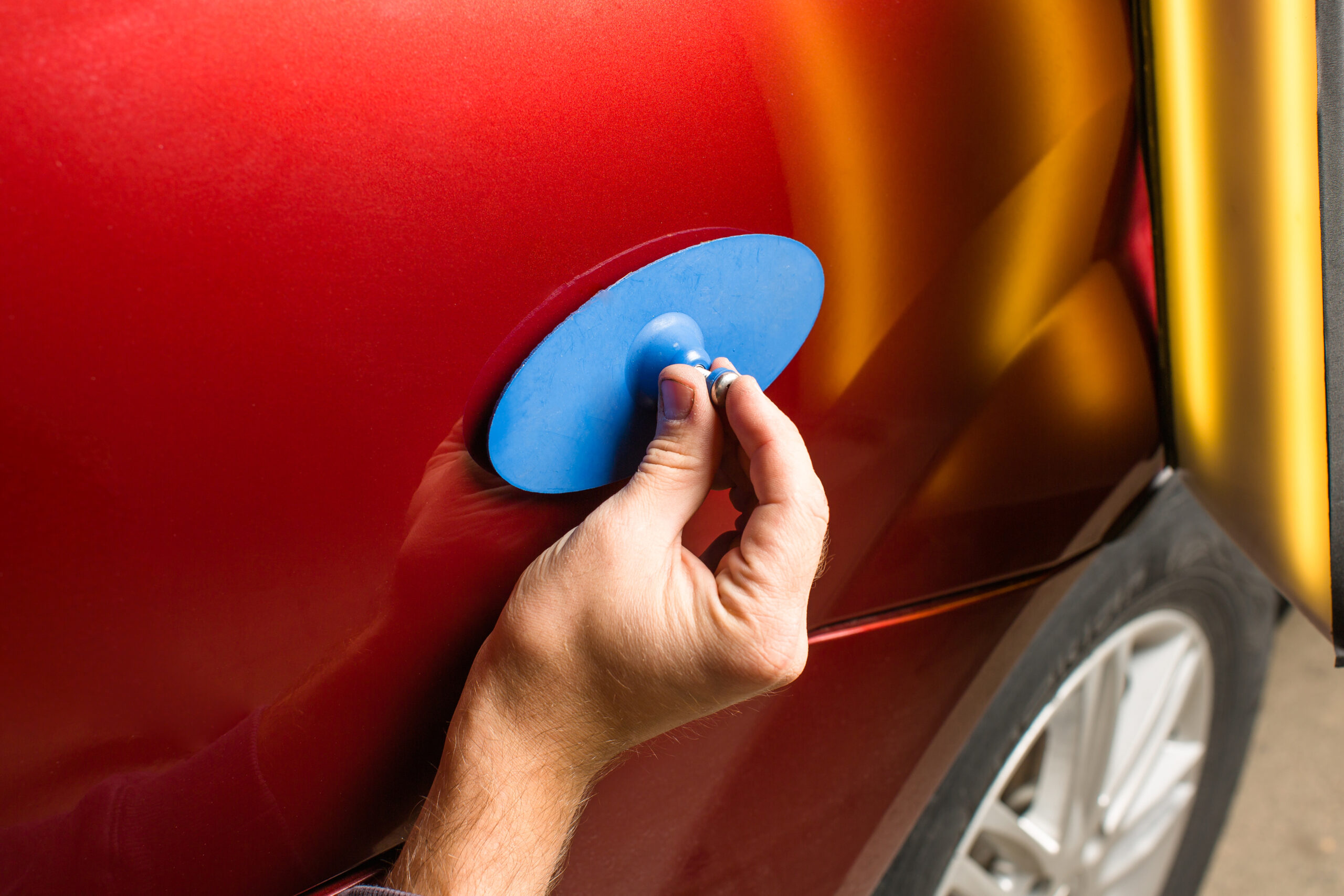
Larger dents and those located near edges, curves, or body lines are harder to repair through PDR without affecting the vinyl wrap. These areas are more likely to stretch or tear during the repair, requiring touch-ups or rewrapping after the dent is removed.
Condition and Quality of the Vehicle Wrap
High-quality vehicle wraps are more durable and flexible, allowing them to withstand the dent removal process. However, regardless of the quality of the vehicle wrap, there will be tearing or discoloration during the repair if they are old, showing signs of wear, or had been exposed to extensive weathering or sun damage.
Technician Skill
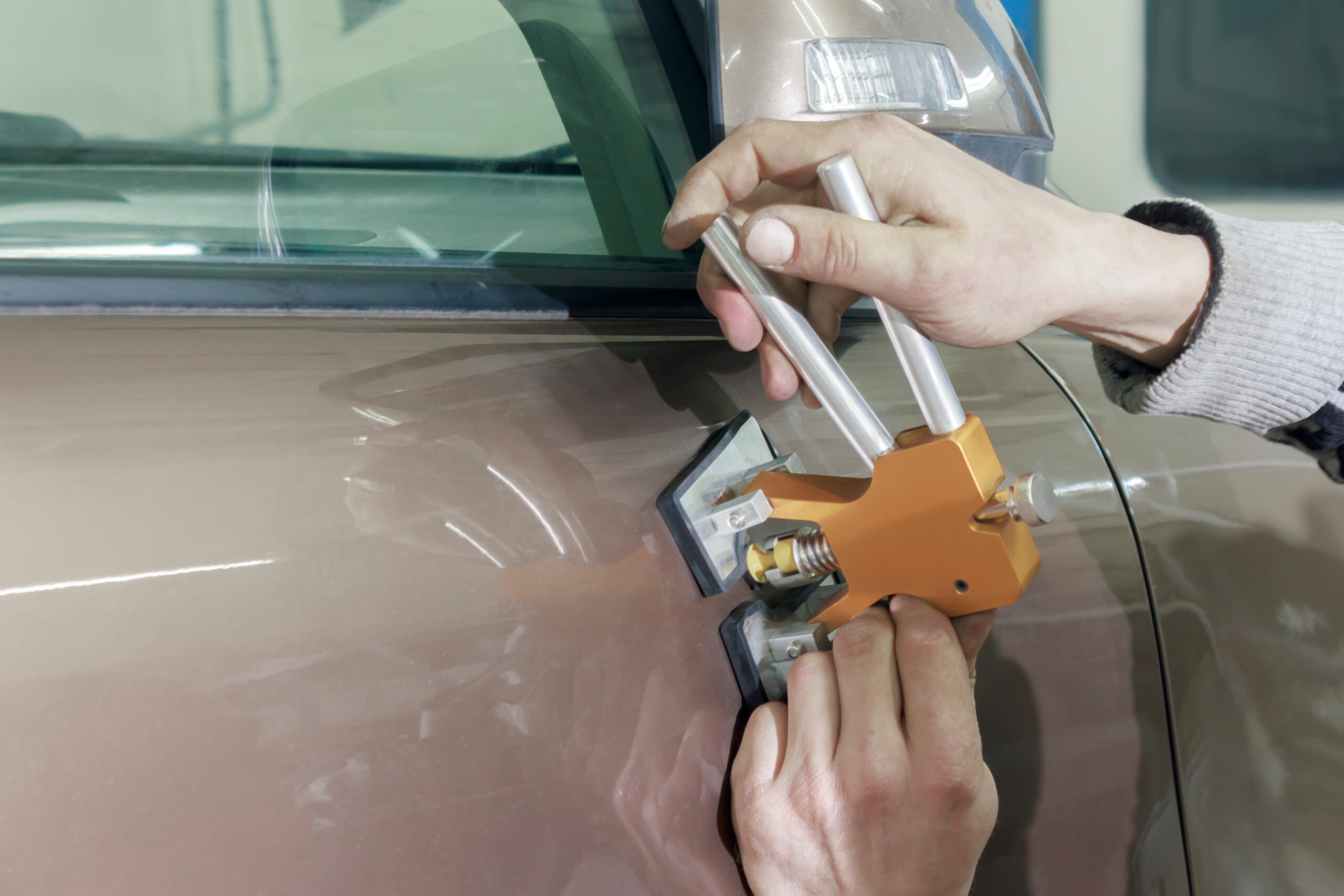
This is the most critical factor in determining if your vehicle’s vinyl wraps will be fine after paintless dent repair. An experienced technician understands the nuances of PDR and vinyl wrap maintenance and delivers the best result based on the situation. At #201WRAP, you can expect your vehicle and its wrap to be treated with the care and attention it requires throughout the entire repair process. And, with our expertise in vehicle wraps and paintless dent repair, we perform the necessary steps to ensure your vehicle rolls out as if there were never any dents to begin with.
Pros and Cons of PDR on Wrapped Cars
Paintless dent repair can be a great way to repair dents on wrapped and unwrapped vehicles. But, it’s important to weigh the pros and cons and choose a skilled technician to ensure the best possible result.
Below are the pros and cons to consider before making your decision:
Pros
- Preserves your vehicle’s vinyl wrap: In most cases, paintless dent removal can allow you to avoid the need to remove and reapply the wrap.
- Preserves your vehicle’s original finish: PDR does not involve anything that may compromise your vehicle’s original finish, so there’s no risk of devaluing your vehicle or mismatching or fading colors in the future.
- Saves you money: PDR is a more cost-effective option than traditional bodywork, so it is advised to have any dent in your vehicle assessed if it can be fixed with PDR before sanding, filling, and painting the damage.
- Quick and efficient: Paintless dent repair is a quicker process than traditional bodywork methods, reducing your vehicle’s downtime.
Cons
- Cannot repair all kinds of dents: Paintless dent repair is only effective on minor dents. Larger or more complex dents may require traditional bodywork.
- Risks the integrity of your vehicle wrap: The quality and condition of the vinyl wrap affects whether PDR can be done without damaging it.
- Success is dependent on technician skill: Having a skilled technician perform PDR on your wrapped vehicle increases the chances for achieving good results.
- Vehicle wraps make the repair more difficult: Wrapped vehicles are more difficult to repair through PDR due to the complexity it adds to the process.
Is PDR the Right Solution for Your Wrapped Car?
Paintless dent repair is an effective and cost-efficient solution for unwrapped and wrapped vehicles. However, it is not always the ideal solution. The suitability depends on factors such as the size, severity, and location of the dent, the quality of the wrap, and the skill of the technician.
Before deciding to have your wrapped car fixed with PDR, it’s essential to have qualified professionals assess the specific condition of your vehicle and determine if it’s the best choice for your wrapped car.
Get a Professional Assessment for Your Car
If you’re unsure whether paintless dent repair is the right solution for your wrapped car, don’t hesitate to contact our team here at #201WRAP. Our expert technicians at our Jacksonville and St. Johns, FL, locations are ready to use their expertise in assessing your vehicle’s condition.
Contact us for a free consultation!